


Follow-up at Breeding Terminal (Part 1): Application of Fishmeal Reduction Solution for Largemouth Bass
Production and Application Background
Largemouth bass are vulnerable to external influences during cultivation, including high and low temperatures, excessive ammonia nitrogen and nitrite levels, as well as harmful components in feed. These factors will ultimately affect the marketing time, commercial traits and survival rate of bass, and cut down farming economic benefits. In actual production, farmers mostly rely on animal health products to improve fish health, yet this practice causes problems such as rising costs and dissolution loss of active ingredients. Therefore, a growing number of farmers turn to functional feed to jointly realize efficient and high-quality aquaculture.
Developed by Mytech, enzymatically hydrolyzed functional protein boasts the advantages of high nutritional value, low harmful substances, strong functional properties and good processing performance. It can boost aquatic animals’ capacity of feed digestion, absorption, metabolism and deposition, enhance the anti-stress capability and disease resistance of fish, and facilitate stable feed quality and healthy development of aquaculture.
Subsequently, the Product R&D Department of Mytech will demonstrate the practical farming performance of largemouth bass feed with reduced fishmeal inclusion after adding enzymatically hydrolyzed functional protein under various cultivation modes and breeding environments.
1 Breeding Terminal Application Effect of Enzymatically Hydrolyzed Functional Protein
[Follow-up Point 1: Mianyang] Comparative evaluation on pond culture: reduce imported fishmeal by incorporating 4% enzymatically hydrolyzed functional protein into commercial feed formulas
Application Performance: The enzymatically hydrolyzed functional protein helps largemouth bass withstand adverse water environment stress, sustain steady growth and improve overall health.
Control Group: Favorable water quality. Fish present considerable variation in body size. The digestive tract remains healthy, while the liver is in a sub-healthy state (swollen, pale and uneven).
Enzymatically Hydrolyzed Functional Protein Group: Extremely poor water quality. Fish present markedly reduced variation in body sizes. The digestive tract is healthy and the liver remains healthy (ruddy in color).
Group | Cultivation Condition | Number of Sampled fish | Sampled Average Body Weight |
Control Group |
| 1 | 97.6 g |
2 | 86.6 g | ||
3 | 102.4 g | ||
4 | 72.2 g | ||
 | |||
Hydrolyzed Functional Protein Group |
Abundant wild fish: mud carp, crucian carp, sharpbelly, southern catfish, grass carp. | 1 | 94.7 g |
2 | 94.3 g | ||
3 | 86.3 g | ||
 | |||
[Follow-up Point 2: Yibin] Comparative evaluation on pond culture of elevated canvas ponds built on road embankments, reducing imported fishmeal by incorporating 4% enzymatically hydrolyzed functional protein into commercial feed formulas
Application Performance: The enzymatically hydrolyzed functional protein improves the digestion, absorption and utilization efficiency of largemouth bass and promotes growth.
Control Group: The liver and digestive tract remain healthy. However, 21 hours after feeding, residual digesta and feces still stay in the anterior and mid-intestine, with a relatively slow digestion rate.
Enzymatically Hydrolyzed Functional Protein Group: The liver and digestive tract remain healthy. The digestive tract is nearly empty 21 hours after feeding, with a relatively fast digestion rate.
Group | Liver | Digestive Tract | |||
Control Group |  |  |  |  |  |
Hydrolyzed Functional Protein Group |  |  |  |  |  |
[Follow-up Point 3: Chongzhou] Comparative evaluation on culture in deep-water culture barrels, reducing imported fishmeal by incorporating 4% enzymatically hydrolyzed functional protein into commercial feed formulas
Application Performance: The enzymatically hydrolyzed functional protein improves digestive tract health and intestinal development of largemouth bass, and facilitates the digestion and absorption of nutrients.
Control Group: The liver is healthy. The gastric mucosa presents severe hyperemia. The intestinal wall is thin with poor toughness.
Enzymatically Hydrolyzed Functional Protein Group: The liver is healthy. The gastric mucosa is in good condition (milky white with distinct folds). The intestinal wall is thick with good toughness.
Group | Liver | Digestive Tract | ||
Control Group |  |  |  | 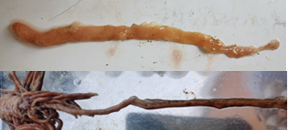 |
Hydrolyzed Functional Protein Group | 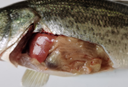 |  |  |  |
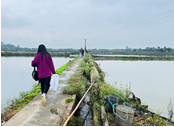
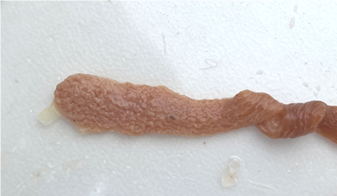
[Partial Results of Ongoing Follow-up on 2024–2025 Market Application Trials Across Different Regions] Reducing imported fishmeal by incorporating 4% enzymatically hydrolyzed functional protein into commercial feed formulas
Application Performance: The liver is healthy (ruddy and glossy with distinct outline); the intestinal tract is healthy, with abundant intestinal villi, thick intestinal wall, strong toughness and no hyperemia.
Cultivation Condition | Liver | Digestive Tract |
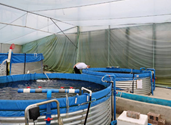 | 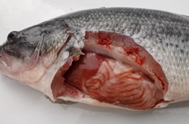 |  |
 |  |  |
 |  |  |
 |  |  |
2 Application Value of Enzymatically Hydrolyzed Functional Protein
When applied under various cultivation modes and environments, enzymatically hydrolyzed functional protein can effectively sustain the growth performance and maintain physical health of largemouth bass. Especially under external environmental stress, such as poor water quality and water temperature fluctuations, the enzymatically hydrolyzed functional peptides in this product can boost the antioxidant, anti-inflammatory and immunomodulatory capacities of the liver and intestinal tract of largemouth bass. This consequently enhances the fish’s stress resistance and raises the overall farming success rate.
【Stay Tuned for the Next Issue】 Follow-up at Breeding Terminal (Part 2): Application of Fishmeal Reduction Solution for Longsnout Catfish |
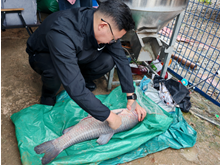
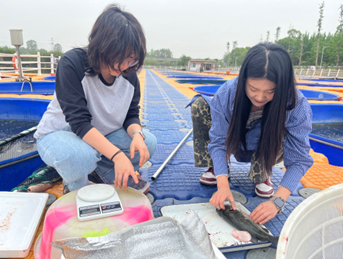
Salute to all Mytech colleagues striving on the frontline.
 |  |  |
 |  |  |
 |  |  |
 |  |  |


Comments