


Study on Reduction of Fish Meal Dosage – Case 2.Applied Research on Extreme Low Fishmeal Application Solution for Largemouth Bass Feed
Updated: Aug 14
[Mytech & Sichuan Agricultural University Joint Research, Article Coming Online Soon. Stay Tuned and Follow Us.]
I Application Background and Solution
In recent years, with the gradual maturity of largemouth bass feed technology, the fishmeal inclusion in the formulas has continuously decreased. The inclusion is concentrated at 35-40% (decreasing by 10-15% compared with 3-4 years ago). This solution evaluates the effects of extreme fishmeal reduction on the growth and health of largemouth bass. It also studies if enzymatically hydrolyzed cottonseed protein could guarantee the growth, health and disease resistance of largemouth bass under low fishmeal formulations. Meanwhile, it provides references for the application of enzymatically hydrolyzed cottonseed protein in low-fishmeal formulations. The largemouth bass feed application solutions are as follows:
Control group: 35% Peruvian Super Steam Fishmeal dosage
Low-fishmeal group: 25% Peruvian Super Steam Fishmeal dosage (On the basis of the control group, 10% fishmeal is reduced, and the formulated plant protein is increased in equal proportions to maintain the consistent crude protein level.)
Low-fishmeal + Enzymatically Hydrolyzed Cottonseed Protein group: On the basis of the low-fishmeal group, 2-6% Cottonseed Protein Concentrate is replaced with Enzymatically Hydrolyzed Cottonseed Protein at equal crude protein levels.
Group | Daily Diet Design | Evaluation Indicators | |||
Nutritional Level | Fishmeal | Cottonseed Protein Concentrate | Enzymatically Hydrolyzed Cottonseed Protein | ||
Control Group | CP 50% EE 11% 3 Replicate/Group 65 fish/replicate 24 g/fish | 35.0% | 10.0% | 0% | Growth Performance Intestinal Digestive and Absorptive Capacity Hepatic Metabolic and Deposition Capacity Disease Resistance: Dextran sulfate sodium (DSS)-induced colitis Formulation Cost: Reduce by 1100-1400 CNY/t (Based on a fish meal price of 17,700–18,500 CNY/t) |
Low-fishmeal Group | 25.0% | 13.0% | 0% | ||
Low-fishmeal + 2% Enzymatically Hydrolyzed Cottonseed Protein | 25.0% | 11.0% | 2.0% | ||
Low-fishmeal + 4% Enzymatically Hydrolyzed Cottonseed Protein | 25.0% | 9.0% | 4.0% | ||
Low-fishmeal + 6% Enzymatically Hydrolyzed Cottonseed Protein | 25.0% | 7.0% | 6.0% | ||
Note: For the dosage of other plant proteins, the control group contained 6% SPC and 8% soybean meal; the low-fishmeal group and enzymatically hydrolyzed cottonseed protein group contained 12% SPC and 10% soybean meal. | |||||
II Application Effect
(1) Enzymatically hydrolyzed cottonseed protein compensates for the impaired growth performance under low-fishmeal diets, bringing it up to the level of regular fishmeal diets
Compared with the control group, growth performance in the low-fishmeal group was reduced significantly, whereas the 4% enzymatically hydrolyzed cottonseed protein group showed comparable.
Compared with the low-fishmeal group, supplementation with 2% and 4% enzymatically hydrolyzed cottonseed protein improved growth performance significantly, whereas the 4% inclusion level yielding the optimal results.
| Control Group | Low-fishmeal Group | Low-fishmeal+2% EHCP Group | Low-fishmeal+4% EHCP Group | Low-fishmeal+6% EHCP Group | Improvement range of 4% EHCP vs low-fishmeal group |
WGR % | 506.80a | 448.46c | 476.94b | 494.29ab | 437.80c | ↑ 45.8 pts |
SGR %/d | 2.73a | 2.58c | 2.66b | 2.70ab | 2.55c | ↑ 0.12%/d |
FI g/fish | 104.43 | 108.24 | 106.79 | 109.86 | 105.75 | —— |
FE % | 116.40a | 99.69b | 107.39ab | 108.26ab | 100.06b | ↑ 8.57 pts |
FCR | 0.86 | 1.00 | 0.93 | 0.92 | 1.00 | ↓ 8% |
(2) Enzymatically hydrolyzed cottonseed protein repairs intestinal structural and functional injuries under low-fishmeal diets to reach/exceed the performance of normal fishmeal feeds
① Intestinal development and digestive capacity
Compared with the control group, the intestinal development index of the low-fishmeal group and the digestibility were decreased significantly, and were comparable with the 4% EHCP group.
Compared with the low-fishmeal group, 4% EHCP significantly increased the intestinal development and digestibility.
| Control Group | Low-fishmeal Group | Low-fishmeal+ 4% EHCP | Improvement range compared with the low-fishmeal group | |
Intestinal Development | Intestinal length index % | 70.86c | 74.44a | ↑ 3.6 pts | |
Intestinal fold height μm | 423a | 384b | 421a | ↑ 9.6 % | |
Intestinal fold thickness μm | 97.16a | 83.76c | 96.63ab | ↑ 15.4 % | |
Intestinal structure |  |  |  | —— | |
Intestinal digestion | Trypsin U/mg | 1425.06a | 1127.40c | 1401.08a | ↑ 24.3 % |
Chymotrypsin U/mg | 2.44a | 2.14b | 2.49a | ↑ 16.4 % | |
Lipase U/mg | 2.09a | 1.84c | 2.10a | ↑ 14.1 % | |
Apparent protein digestibility % | 89.27a | 87.35b | 89.85a | ↑ 2.5 pts | |
② Intraoral gavage with 3% DSS for 90 h to induce enteritis
Compared with the control group, the low-fishmeal group exhibited obvious impairment of intestinal structure, significantly reduced immunity and antioxidant capacity, aggravated oxidative damage and marked enteritis, while the 4% EHCP group showed equivalent/superior indicators.
Compared with the low-fishmeal group, 4% EHCP was beneficial to alleviating DSS-induced intestinal structural injury, and elevated immunity and antioxidant capacity to suppress enteritis progression.
Control Group | Low-fishmeal Group | Low-fishmeal+ 4% EHCP | Improvement range compared with the low-fishmeal group | ||
Macroscopic appearance of enteritis |  | 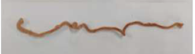 |  | Unremarkable inflammation | |
Intestinal structural integrity |  |  |  | Better structural integrity | |
Immunity | Anti-inflammatory capacity |  | Greater anti-inflammatory capacity | ||
LZM μg/mg | 0.26ab | 0.24c | 0.27a | ↑ 12.5% | |
AKP U/L | 292.62a | 273.71c | 290.46a | ↑ 6.1% | |
Antioxidant capacity | T-AOC U/mg | 0.14a | 0.12b | 0.15a | ↑ 25% |
GSH mg/g | 6.79b | 5.61c | 7.98a | ↑ 42.2% | |
MDA nmol/g | 9.66c | 10.91a | 9.80c | ↓ 10.2% | |
(3) Enzymatically hydrolyzed cottonseed protein repairs hepatic structural and functional injuries under low-fishmeal diets to reach/exceed the performance of normal fishmeal feeds
① Hepatic Architecture
Compared with the control group, the hepatic contour of the low-fishmeal group was less distinct and more enlarged and the nuclei gradually dissolved with vacuolization appearing. In the 4% EHCP group, hepatocytes were arranged in an orderly manner. The nuclei were round and located in the center of the cytoplasm. Moreover, the levels of alanine aminotransferase (ALT) and aspartate aminotransferase (AST) were comparable to those of the control group.
| Control Group | Low-fishmeal Group | Low-fishmeal+ 4% EHCP | Improvement range compared with the low-fishmeal group | |
Hepatic development | Hepatic Architecture |  |  |  | The hepatic architecture was more intact |
Hepatic metabolism | Serum ALT U/L | 18.64bc | 19.83a | 18.42c | ↓ 7% |
Serum AST U/L | 27.80c | 30.64a | 27.69c | ↓ 9.6% | |
② Hepatic Metabolic Capacity
Compared with the control group, the capacities of protein anabolism and lipid catabolism in the low-fishmeal group were significantly decreased, whereas the 4% EHCP group was comparable to the control group.
Compared with the low-fishmeal group, the 4% EHCP group was beneficial for promoting lipid catabolism and reducing fat deposition, thereby directing more protein toward anabolism and improving protein deposition efficiency.
| Control Group | Low-fishmeal Group | Low-fishmeal+ 4% EHCP | Improvement range compared with the low-fishmeal group | |
Protein Anabolism | Serum total protein mg/ml | 37.35a | 35.85b | 37.66a | ↑ 5.0% |
Serum albumin g/L | 11.71ab | 9.89c | 11.74a | ↑ 18.7% | |
Lipid Catabolism | Carnitine palmitoyltransferase IU/g | 2.36b | 1.98c | 3.06a | ↓ 54.5% |
Whole-body composition | |||||
CP % | 16.68a | 16.16b | 16.55ab | —— | |
Crude fat % | 8.99ab | 8.85c | 9.01a | —— | |
Protein deposition efficiency % | 0.39a | 0.32c | 0.38a | ↑ 18.75 pts | |
Fat deposition efficiency % | 1.15a | 0.99c | 1.15a | ↑ 16.2 pts | |
Based on the above results, when 4% EHCP was used to replace an equivalent amount of protein from cottonseed protein concentrate in a diet with an extremely low fishmeal level (25% Peruvian super prime steam fishmeal) for largemouth bass, the fish showed the best growth performance, health status, and disease resistance. Moreover, they achieved growth and health performance comparable to those of the group fed 35% fishmeal, and the feed cost was reduced by ¥1200–¥1300 per tonne.
[Please look forward to the next issue]
Study on Reduction of Fish Meal Dosage – Case 2.
Study on the Application of Fishmeal Reduction Solutions in Low-Protein Diets for Yellow Catfish


Comments